Why Buy Used Cryogenic Equipment? (Besides the Obvious)
Look, I'm not going to pretend I have an unbiased opinion here. I am literally a man whose wife made him start a business selling cryogenic equipment because I accumulated too much of it. But even setting aside my personal... condition... the economics of buying used cryogenic equipment are genuinely hard to argue with.
A new vacuum-insulated cryogenic storage tank from a major manufacturer like Chart Industries or Cryofab can run anywhere from $80,000 to well over $500,000 depending on capacity, working pressure, and configuration. Lead times of 16 to 30 weeks are standard; custom builds can stretch beyond a year. That's a lot of waiting around while your money sits in someone else's order queue.
Used and refurbished cryogenic equipment? Savings of 40% to 70% off new pricing, and — here's the part that gets me every time — it's typically available for immediate shipment. (This is how I ended up with three tanks in my warehouse when I only needed one. The deals were too good. My wife disagrees with this assessment.)
But here's where I have to put on my serious hat: buying used cryogenic equipment is not like buying a used forklift. These are pressure vessels operating at temperatures that would make Antarctica feel like a beach vacation. The consequences of cutting corners on inspection and verification range from "expensive lesson" to "extremely bad day." This guide covers everything you need to evaluate before making a purchase — all the things I wish someone had told me before my first acquisition.
Understanding Equipment Categories (A Tour of My Collection)
The cryogenic equipment market covers several major categories, each with its own inspection priorities and its own way of draining your bank account:
Cryogenic Storage Tanks are the backbone of any gas installation — and frankly, the most beautiful pieces of industrial engineering ever created. (My wife does not share this view.) These vacuum-insulated vessels store liquefied gases — nitrogen, oxygen, argon, LNG, CO2 — at temperatures as low as -320°F. Capacities range from 500-gallon portable dewars to 30,000+ gallon bulk storage tanks. Key specifications include volume (gallons), maximum allowable working pressure (MAWP in PSI), and the gas service the tank is rated for. I have three of these in the warehouse right now. Each one a specimen.
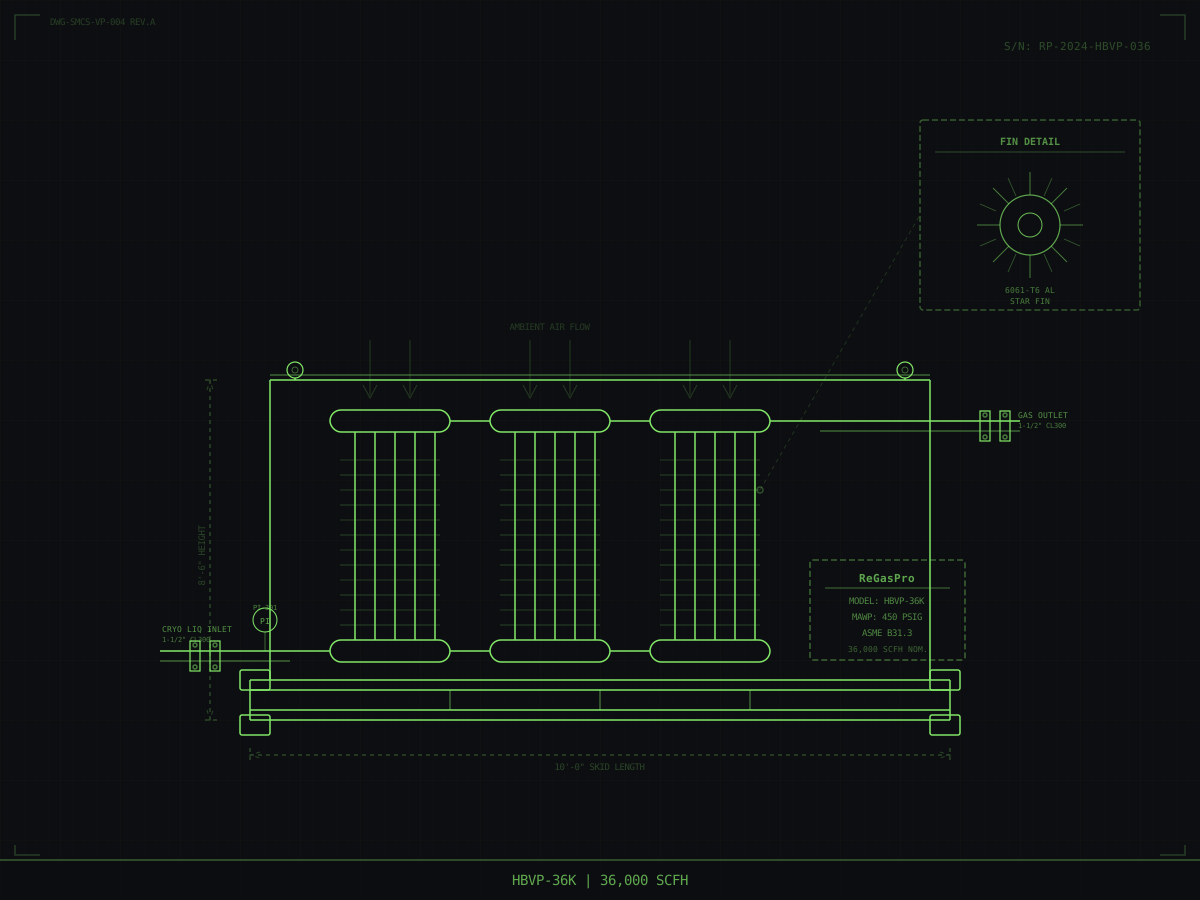
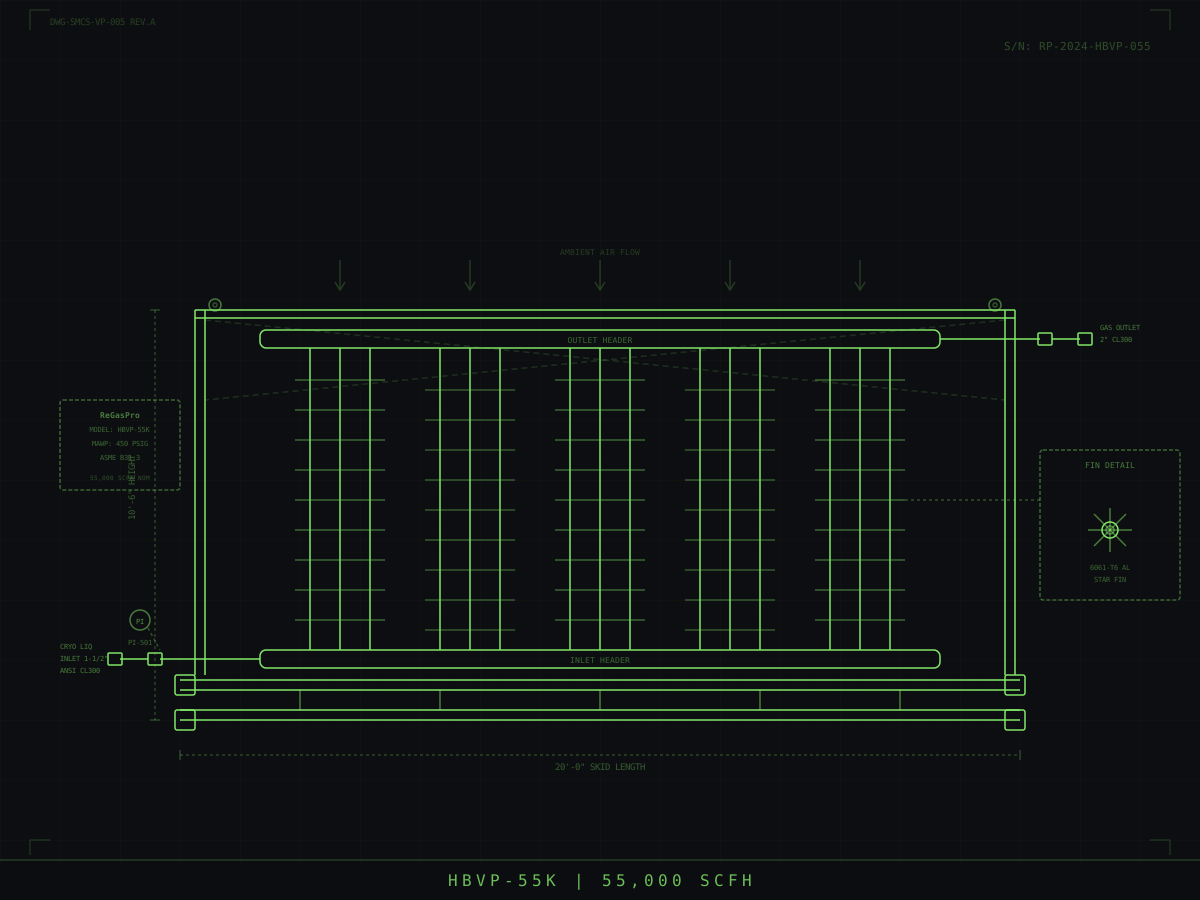
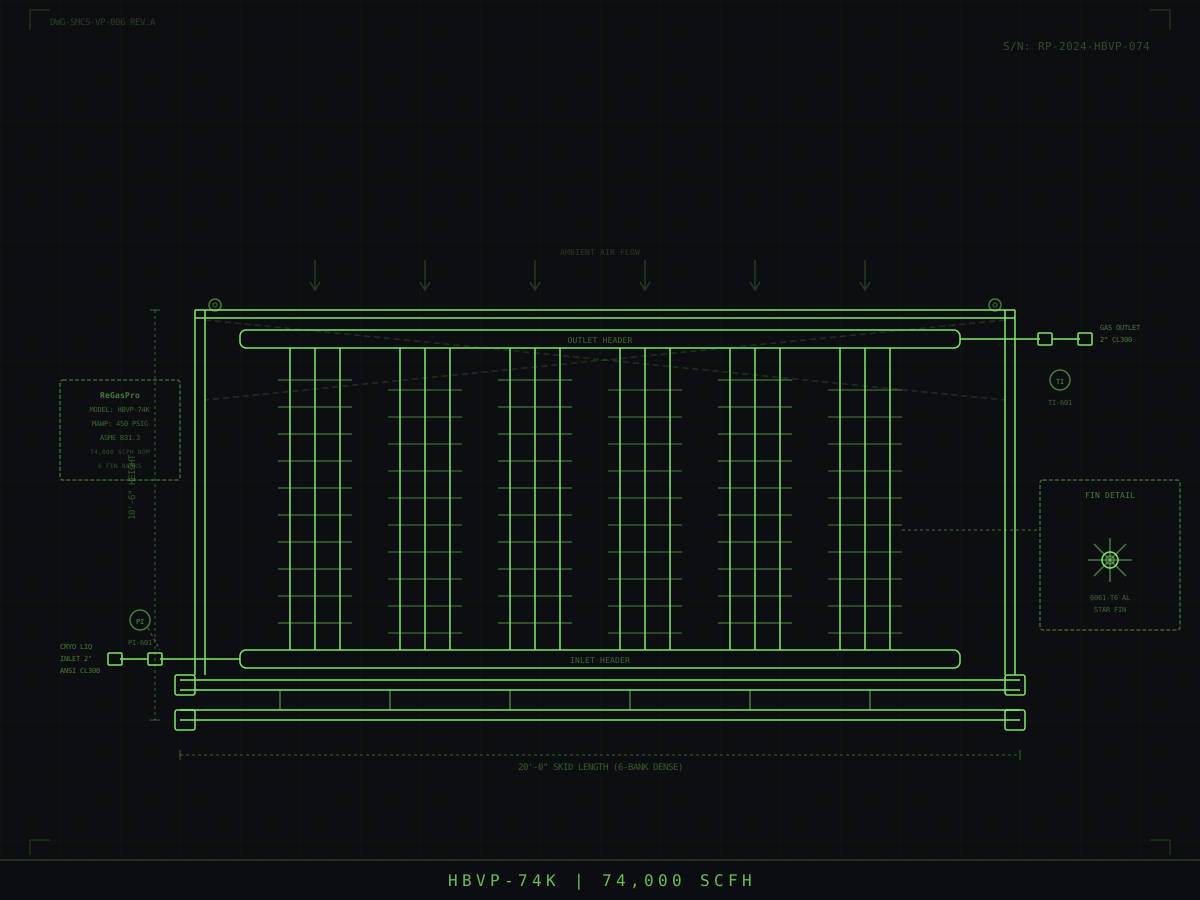
Ambient Air Vaporizers convert cryogenic liquids back to gas phase using atmospheric heat exchange. They require no external energy source, which means they're basically just sitting there looking like giant aluminum sculptures, doing thermodynamics for free. They're the most common vaporization method for nitrogen, oxygen, and argon installations. Sizing is measured in SCFH (standard cubic feet per hour) flow capacity.
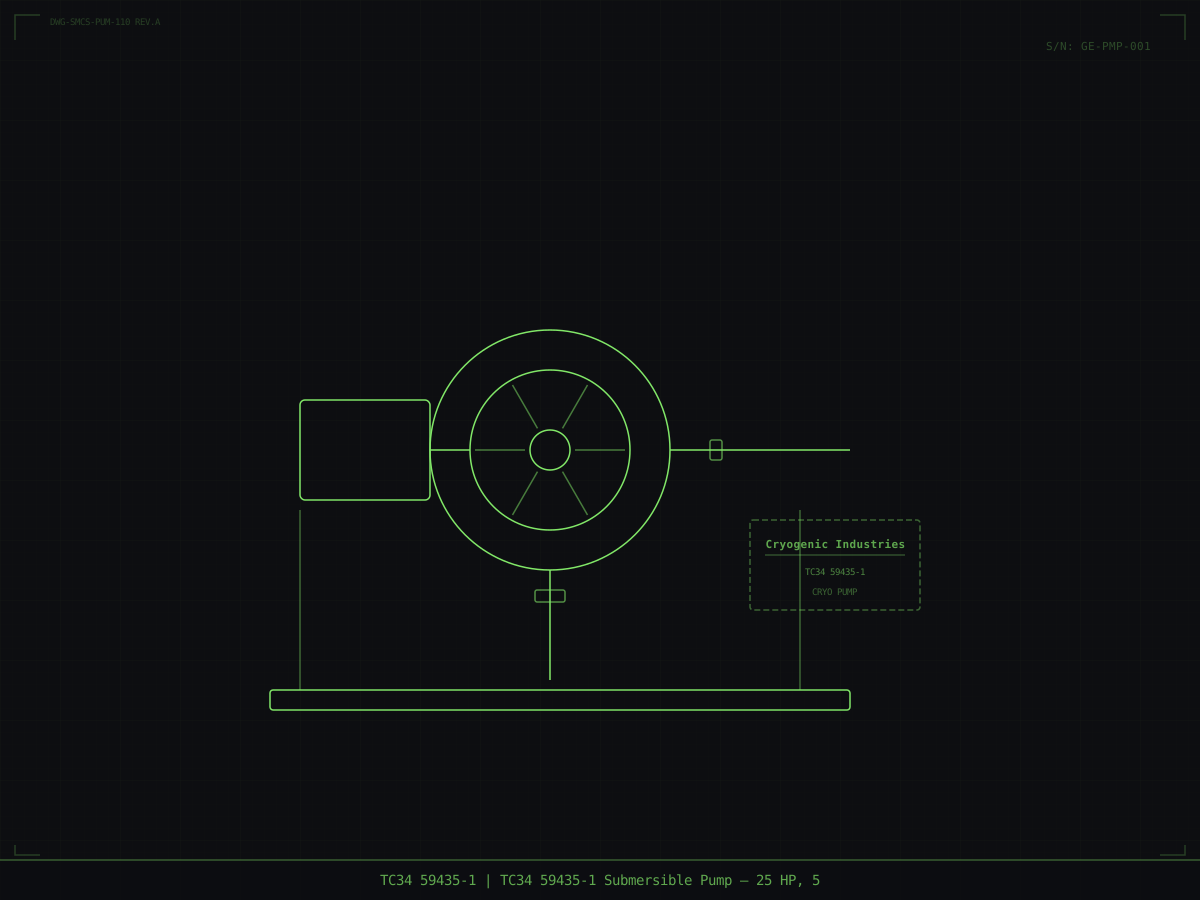
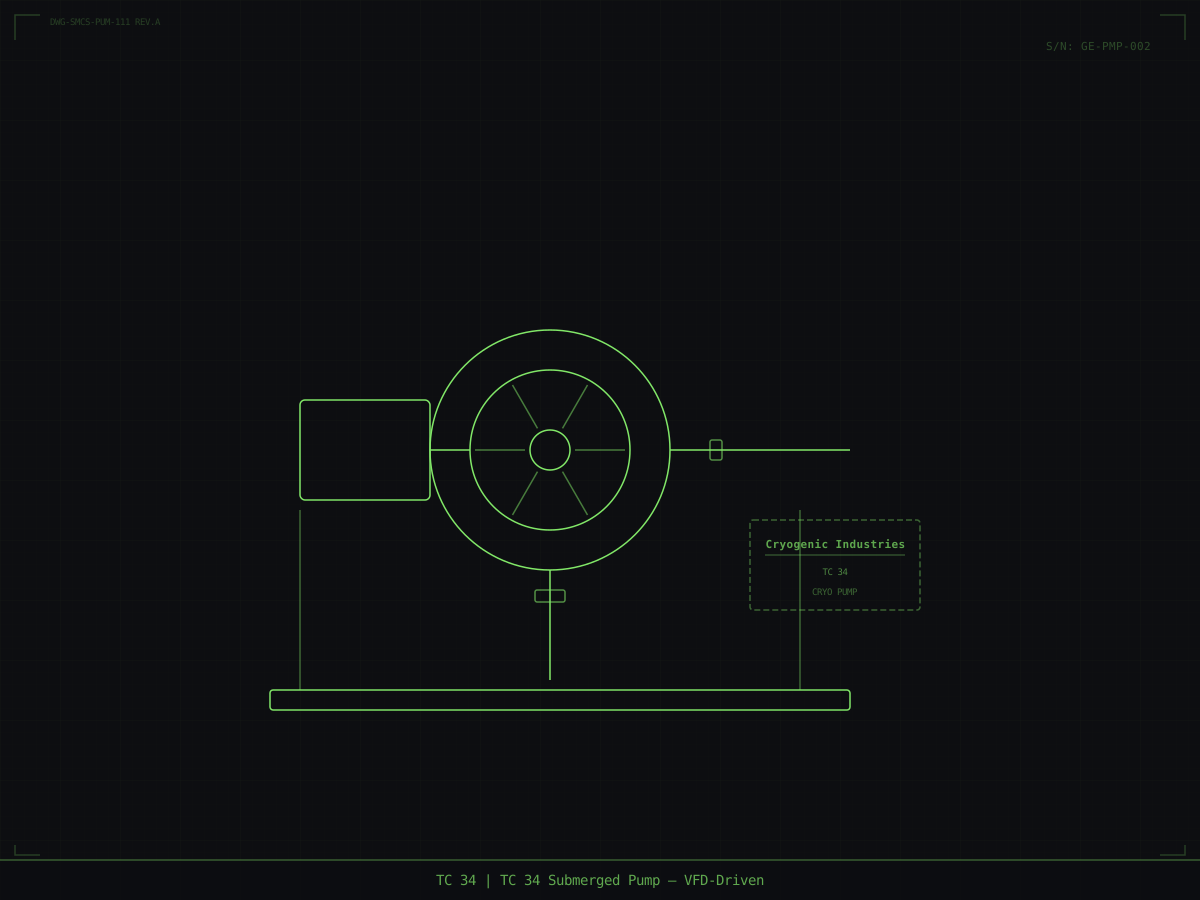
Cryogenic Pumps move liquefied gases from storage to the point of use. These range from small reciprocating pumps for cylinder filling to large centrifugal units for high-flow applications. Pump condition is absolutely critical — seals, bearings, and piston assemblies are the primary wear components, and a bad pump will ruin your whole week faster than you can say "catastrophic seal failure."
Compressors are essential for CNG (compressed natural gas) fueling stations and high-pressure gas applications. CNG compressors boost pipeline-pressure natural gas (typically 30-60 PSI) up to 3,600-5,500 PSI for vehicle fueling. Brands like ANGI, IMW Industries, and Greenfield dominate this segment. These are the workhorses — loud, powerful, and expensive. I respect them deeply.
Critical Inspection Points (The Part Where I Save You From Yourself)
1. ASME Certification and Nameplate Data
Every cryogenic pressure vessel sold in the United States must meet ASME (American Society of Mechanical Engineers) Boiler and Pressure Vessel Code requirements. The ASME nameplate — also called the dataplate — is riveted or welded to the vessel and contains critical information:
- Manufacturer name and location
- Serial number
- Year of manufacture
- Maximum Allowable Working Pressure (MAWP)
- Minimum Design Metal Temperature (MDMT)
- National Board registration number
Never — and I mean NEVER — purchase a cryogenic vessel without a legible, intact ASME nameplate. A missing or illegible nameplate can render the vessel uninsurable and potentially illegal to operate in many jurisdictions. I learned this the hard way on my second purchase. Request photos of the nameplate before making any commitment. If the seller gets squirmy about this request, that tells you everything you need to know.
2. Vacuum Integrity (The Silent Killer of Good Deals)
Double-walled cryogenic tanks rely on vacuum insulation between the inner and outer vessels. A compromised vacuum means dramatically increased boil-off rates and reduced holding times. Think of it like buying a thermos with a crack in it — technically still a thermos, practically just a really expensive cup. Signs of vacuum loss include:
- Frost or condensation on the outer shell (the most obvious indicator — if the outside of the tank looks like it's been in a freezer, the vacuum is toast)
- Abnormally high boil-off rates reported by the seller
- Visible damage to the outer jacket
Ask the seller for the last recorded vacuum level (measured in microns). A healthy tank should read below 50 microns. Readings above 200 microns indicate degraded insulation performance. Vacuum can sometimes be restored through re-evacuation, but the underlying cause — a leak in the outer jacket, failed piping penetrations, or degraded perlite insulation — must be identified and addressed first. Don't let anyone tell you "just re-vac it and you're good." That's like putting a fresh coat of paint on a sinking boat.
3. Pressure Testing and Relief Valves
Request documentation of the most recent hydrostatic pressure test. ASME pressure vessels require periodic inspection per the National Board Inspection Code (NBIC). Relief valves must be within their certification period — typically 3 to 5 years depending on jurisdiction and gas service.
Expired relief valves are not just a compliance issue; they are a safety hazard. I cannot stress this enough. Budget for replacement or recertification of all relief valves on any used vessel purchase. My wife still brings up the time I bought a tank with expired relief valves and the recertification cost more than the freight. She has a point.
4. Piping and Instrumentation Condition
Inspect all piping, valves, gauges, and instrumentation. Cryogenic service piping is typically stainless steel (304 or 316) to withstand thermal cycling. Look for:
- Corrosion on external piping and fittings
- Damaged or missing gauge glasses and pressure indicators
- Evidence of prior leaks at flanged connections
- Condition of flex hoses and transfer lines
5. Inner Vessel Condition
For tanks that have been out of service, the inner vessel condition is paramount. Tanks that stored oxygen or other oxidizing gases must be verified clean and free of hydrocarbon contamination before reuse. Tanks being repurposed from one gas service to another require professional cleaning and potentially re-certification. This is not optional. This is not "probably fine." Get it checked.
Documentation You Should Demand (Be Annoying About This)
Before finalizing any purchase, ensure the seller can provide:
- U-1A Manufacturer's Data Report — The original ASME filing that documents the vessel's construction details
- Nameplate photos — Clear images of the ASME nameplate with all data legible
- Inspection history — Records of any periodic inspections, hydrostatic tests, or NDE (non-destructive examination)
- Maintenance records — Service history including vacuum system maintenance, valve replacements, and any repairs
- Relief valve certifications — Current test certificates for all pressure relief devices
A reputable seller will have this documentation organized and available. If a seller cannot produce basic paperwork, that is not a red flag — it's a red banner the size of a parade float. Walk away.
Logistics and Installation (Where the Hidden Costs Live)
Cryogenic equipment is heavy, oversized, and requires specialized transport. A 6,000-gallon vertical cryogenic tank can weigh 15,000 to 20,000 pounds empty. Larger tanks — 11,000 gallons and above — typically require flatbed transport with crane service for loading and unloading. (Ask me about the time I tried to move an 11,000-gallon tank with inadequate rigging. Actually, don't. Some experiments are best left undocumented.)
Factor these costs into your total acquisition budget:
- Freight: Flatbed or step-deck trailer; oversize permits may be required for tanks exceeding standard width or height
- Rigging and crane service: Required for offloading and setting vessels in place
- Foundation and pad work: Vertical tanks require engineered concrete pads; horizontal tanks need saddle supports
- Piping tie-ins: Connecting to existing gas distribution infrastructure
- Permitting: Local AHJ (Authority Having Jurisdiction) permits for pressure vessel installation
Red Flags to Watch For (The "Walk Away" Checklist)
Walk away from any deal where:
- The ASME nameplate is missing, defaced, or illegible
- The seller cannot provide a serial number or manufacturer information
- There is visible frost on the outer jacket of a vacuum-insulated vessel
- No inspection or maintenance records exist
- The price seems dramatically below market — it usually means hidden problems (trust me, I've chased a few "deals" that turned out to be very expensive lessons)
- The seller pressures you to skip inspection or buy sight-unseen without documentation
The Bottom Line (From Someone Who's Been There)
Used cryogenic equipment represents excellent value when purchased from knowledgeable, transparent sellers who maintain proper documentation and allow thorough inspection. The key is doing your due diligence: verify the paperwork, inspect the hardware, and work with suppliers who understand the equipment they are selling.
At SellMyCryogenicShit.com, every piece of equipment in our inventory is physically inspected, pressure tested where applicable, and documented with real serial numbers, dataplates, and maintenance histories before it ever hits our listing. We do not sell mystery equipment. I've made enough mystery purchases in my life to know that nobody enjoys the surprise. If you have questions about a specific piece or want a second opinion on something you're looking at elsewhere — reach out. I genuinely enjoy talking about this stuff. (That's what got me into this mess in the first place.)