Two Forms of the Same Fuel, Entirely Different Equipment (And Yes, People Confuse Them)
Liquefied natural gas (LNG) and compressed natural gas (CNG) are both methane — chemically identical fuel. Same molecule. Same gas. That's where the similarities end, and that's where the trouble starts.
The way each is stored, transported, and dispensed requires fundamentally different equipment. Confusing the two or misunderstanding their requirements leads to costly mistakes, especially in the secondary equipment market. I once watched a guy try to use CNG storage tubes for an LNG application. The look on the engineer's face when he found out was… educational. For everyone involved.
This guide breaks down the critical equipment differences between LNG and CNG systems so you can make informed purchasing decisions — and avoid becoming someone else's cautionary tale.
Storage: Cryogenic vs. High-Pressure (Cold vs. Squeezed)
This is the most fundamental difference, and it drives every other equipment distinction.
LNG Storage — The Cold Science
LNG is natural gas cooled to approximately -260°F (-162°C), at which point it condenses into a liquid occupying roughly 1/600th of its gaseous volume. Think about that for a second. You take a room full of gas and turn it into a puddle. That's beautiful. That's science. LNG storage tanks are:
- Double-walled vacuum-insulated pressure vessels — The inner vessel (typically stainless steel) holds the cryogenic liquid; the outer vessel (carbon steel) provides structural support and vacuum jacket containment. It's basically a thermos designed by extremely cautious engineers.
- Low to moderate pressure — Working pressures typically range from 50 PSI to 250 PSI
- Temperature-critical — The vacuum insulation system must maintain cryogenic temperatures; any heat leak causes boil-off (the liquid converting back to gas). You are fighting thermodynamics every second of every day with these things.
- Large capacity — Common sizes range from 6,000 to 18,000+ gallons. An 18,000-gallon LNG tank from Chart Industries (model VS-18000SC-175CS) stores the energy equivalent of approximately 10,800 DGE (diesel gallon equivalents)
LNG tanks are engineered for a specific set of challenges: maintaining extreme cold, managing boil-off gas, and handling thermal cycling as the tank is filled and emptied. The vacuum insulation system is the most critical — and most expensive — component. A compromised vacuum dramatically increases boil-off rates and can render the tank uneconomical to operate. (I have a 15,000-gallon specimen in my inventory right now with a perfect vacuum. It's a thing of beauty.)
CNG Storage — The Brute Force Approach
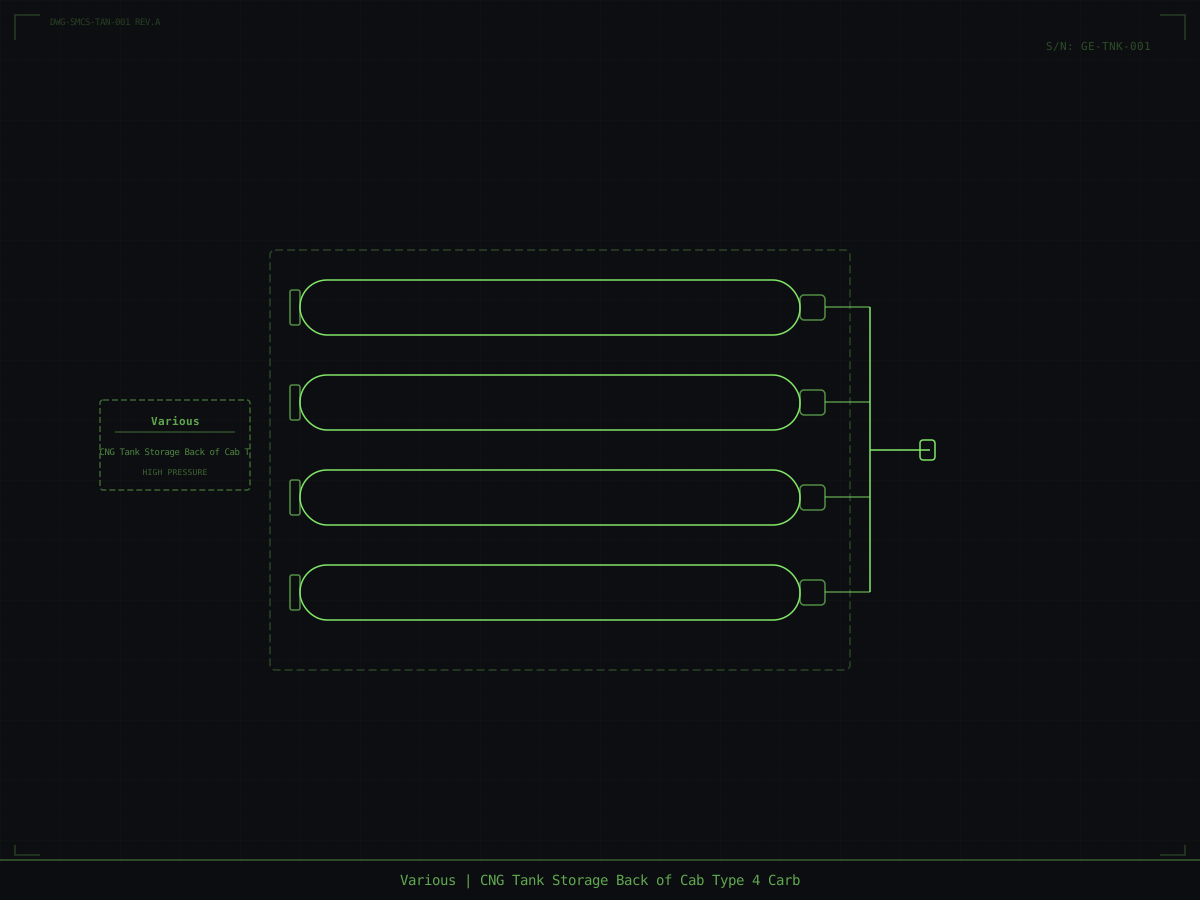
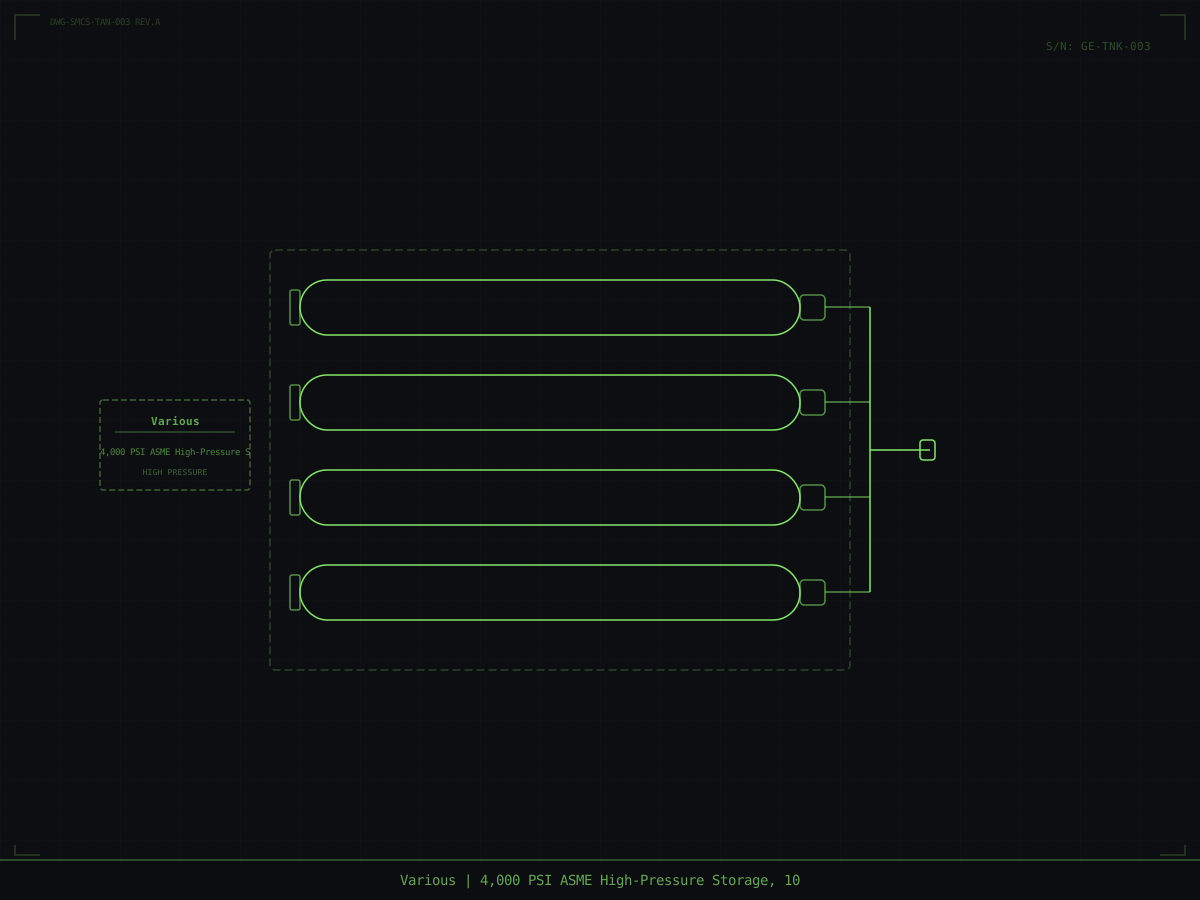
CNG is natural gas compressed to 3,000-5,500 PSI at ambient temperature. No cryogenics required — just raw, unapologetic pressure. CNG storage vessels are:
- Single-walled high-pressure vessels — No vacuum insulation needed since the gas is stored at ambient temperature
- Extremely high pressure — Working pressures of 3,600 PSI (standard vehicle fueling) to 5,500 PSI (station buffer storage). For context, your car tires are at about 35 PSI. We're talking 100 times that.
- Multiple vessel types — Type 1 (all steel), Type 2 (steel with composite wrap), Type 3 (aluminum liner with composite wrap), and Type 4 (polymer liner with full composite wrap)
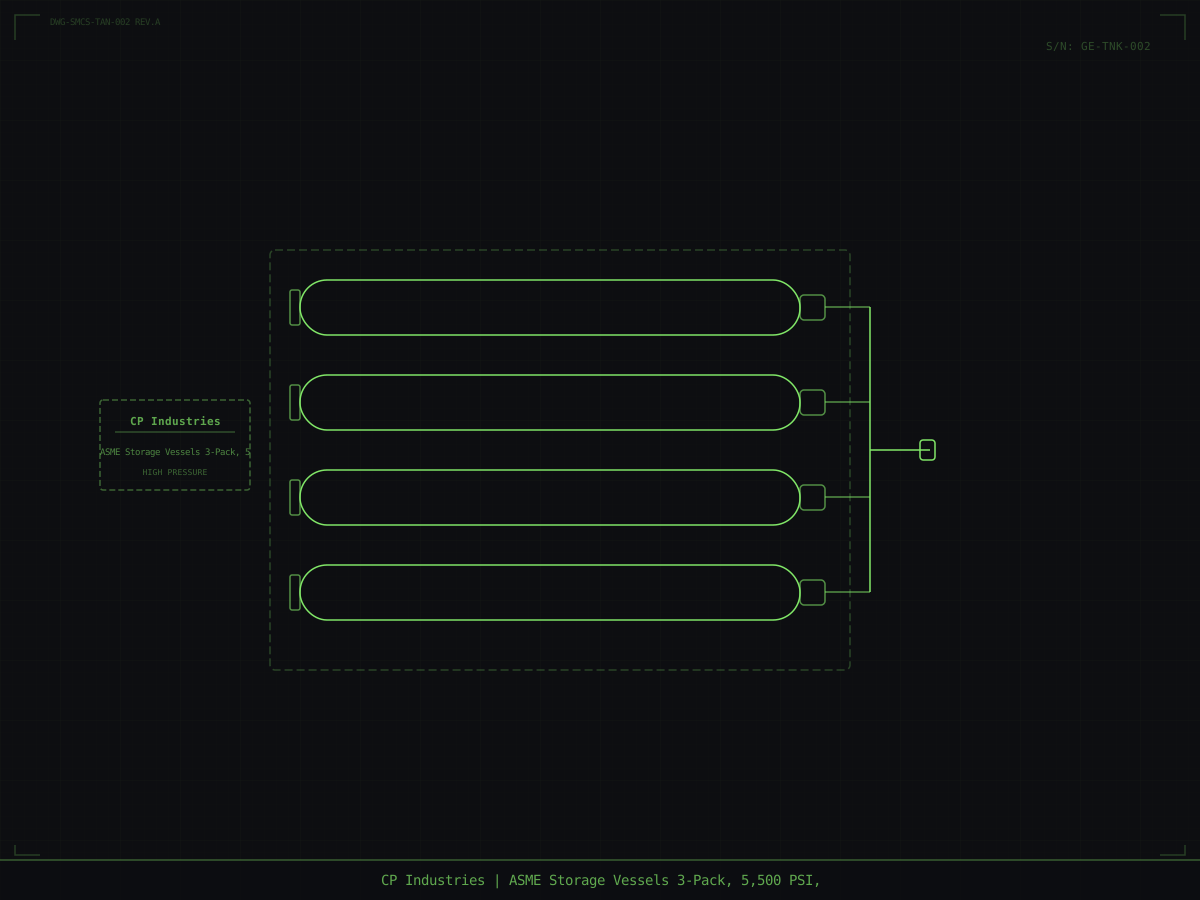
- Smaller individual capacity — But often deployed in multi-vessel packs. A standard 3-pack of 24-foot ASME tubes at 5,500 PSI provides approximately 500 DGE of storage
CNG storage is about containing enormous pressure. The engineering priority is wall thickness, material strength, and fatigue life — how many pressure cycles the vessel can withstand before it must be retired. LNG is a finesse game; CNG is an arm-wrestling match with physics.
Pressure Ratings: A Critical Distinction (Read This Twice)
Understanding working pressure is essential when evaluating equipment:
| Parameter | LNG | CNG |
|---|---|---|
| Typical working pressure | 50-250 PSI | 3,600-5,500 PSI |
| Storage temperature | -260°F (-162°C) | Ambient |
| Vessel construction | Double-wall, vacuum-insulated | Single-wall, high-pressure rated |
| Primary insulation | Vacuum + perlite or MLI | None required |
| Boil-off management | Required | Not applicable |
The pressure difference is not just a specification number — it determines every component in the system. CNG piping, fittings, valves, and connections must all be rated for pressures 15x to 30x higher than equivalent LNG components. They are not interchangeable. I'm putting that in bold because I've gotten phone calls from people who learned this the expensive way.
Compression vs. Liquefaction (How Each Gets to the Party)
CNG Compression
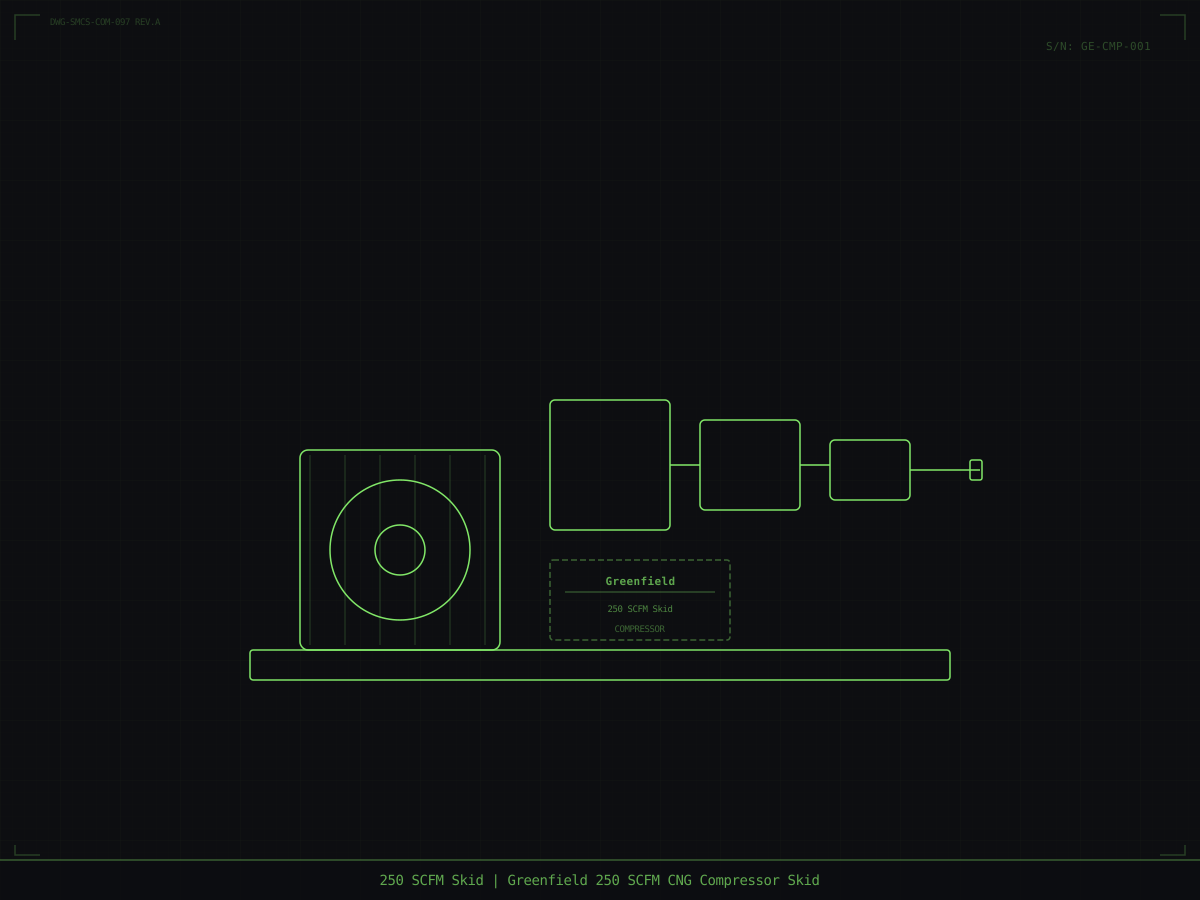
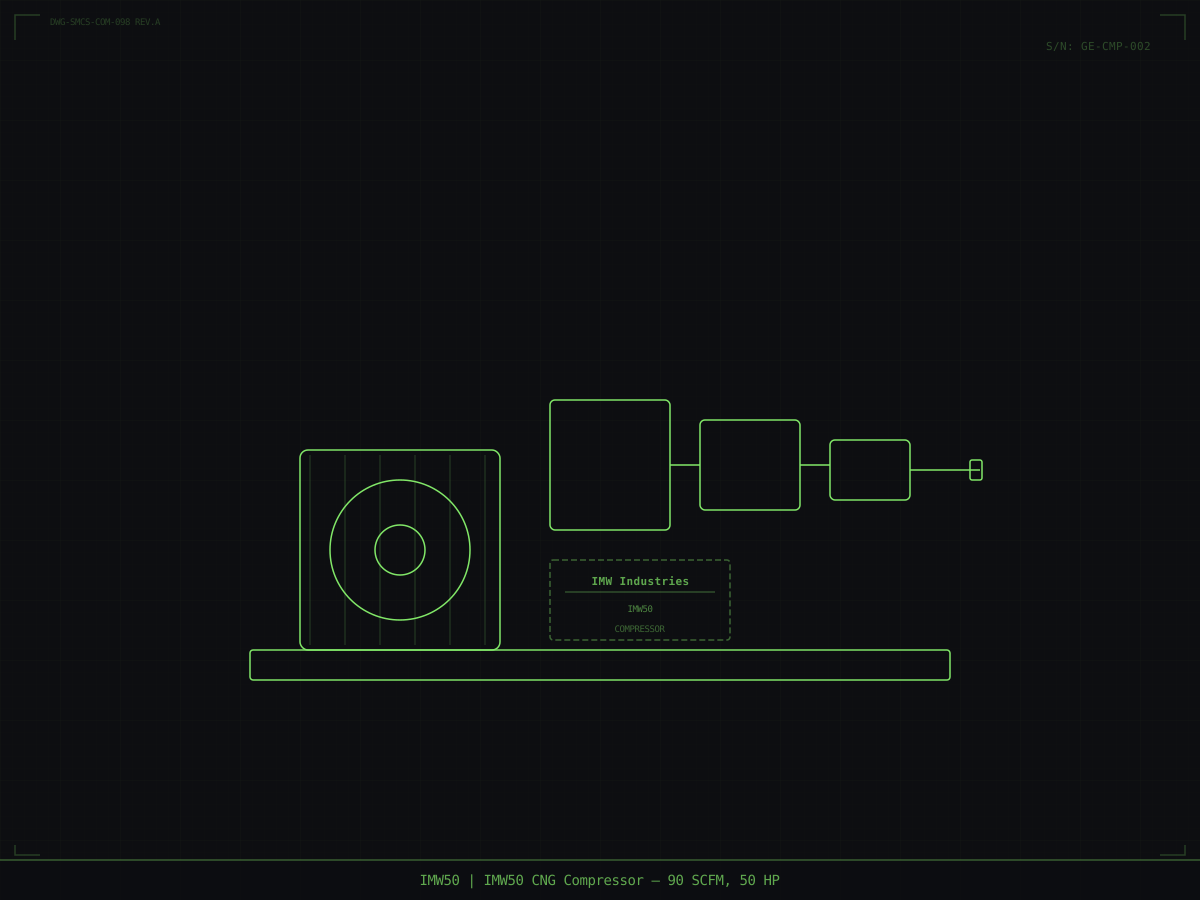
CNG stations use multi-stage reciprocating compressors to boost pipeline-pressure natural gas (typically 30-60 PSI) up to dispensing pressure (3,600-4,500 PSI). That's like taking a whisper and turning it into a scream. A typical CNG compressor package includes:
- Multi-stage reciprocating compressor — Usually 3 to 5 stages of compression
- Gas dryer system — Removes moisture between compression stages (critical to prevent ice formation and corrosion)
- Oil separation system — Removes lubricating oil from the compressed gas stream
- Control panel — PLC-based controls for pressure sequencing, safety shutdowns, and storage management
- Cooling system — Intercoolers and aftercoolers to manage heat of compression
CNG compressors are the workhorses of the station and the highest-maintenance component. They are sized by flow rate in SCFM (standard cubic feet per minute) — a 250 SCFM compressor can fuel approximately 50 to 80 light-duty vehicles per day. They're also the most common piece of equipment I purchase from decommissioned stations, and the condition varies wildly. (See my decommissioning checklist article for how to properly remove these.)
LNG Liquefaction and Pumping
LNG production occurs at large-scale liquefaction plants — not at the fueling station level. You are not making LNG at your station; you are receiving it pre-made, like a very cold pizza delivery. LNG stations receive pre-liquefied fuel by tanker truck. Instead of compressors, LNG stations use:
- Cryogenic pumps — Submerged or external pumps that boost LNG pressure for dispensing. These pumps operate at cryogenic temperatures and require specialized seals and materials
- Vaporizers — Convert LNG back to gaseous form when needed. Ambient air vaporizers (large aluminum fin structures) are most common, though some stations use heated water bath or electric vaporizers
- Pressure-building circuits — Use controlled vaporization of a small LNG stream to maintain tank pressure
Vaporization Equipment (Where the Magic Happens)
Ambient Air Vaporizers (LNG and Cryogenic Applications)
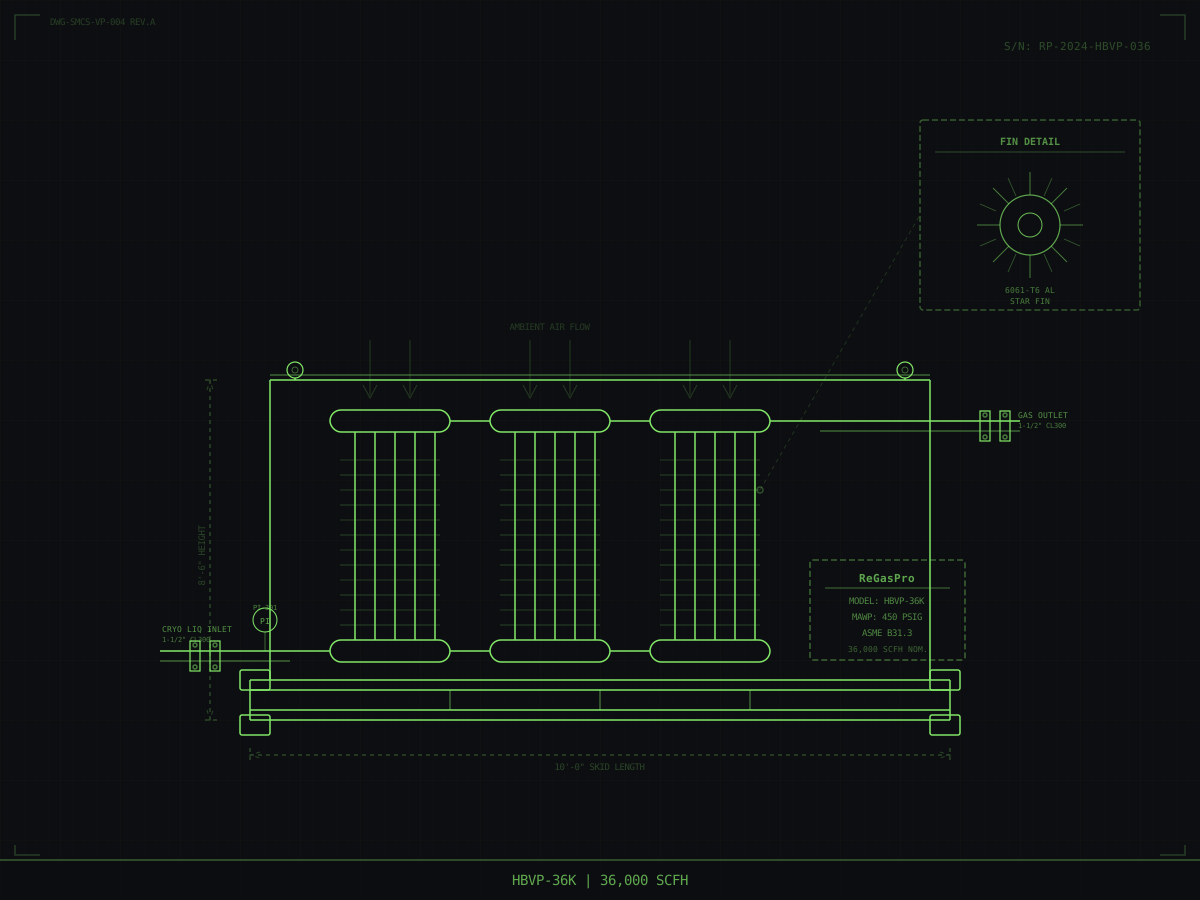
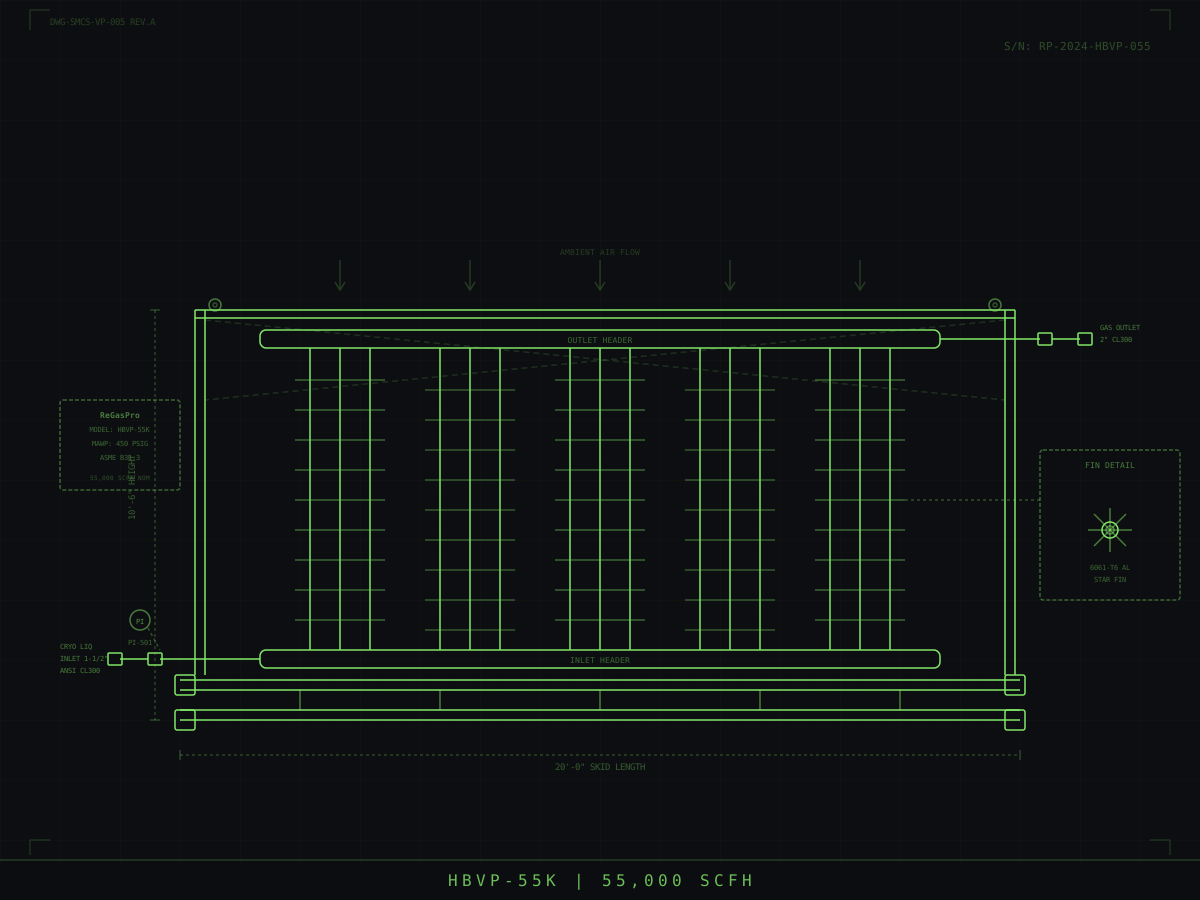
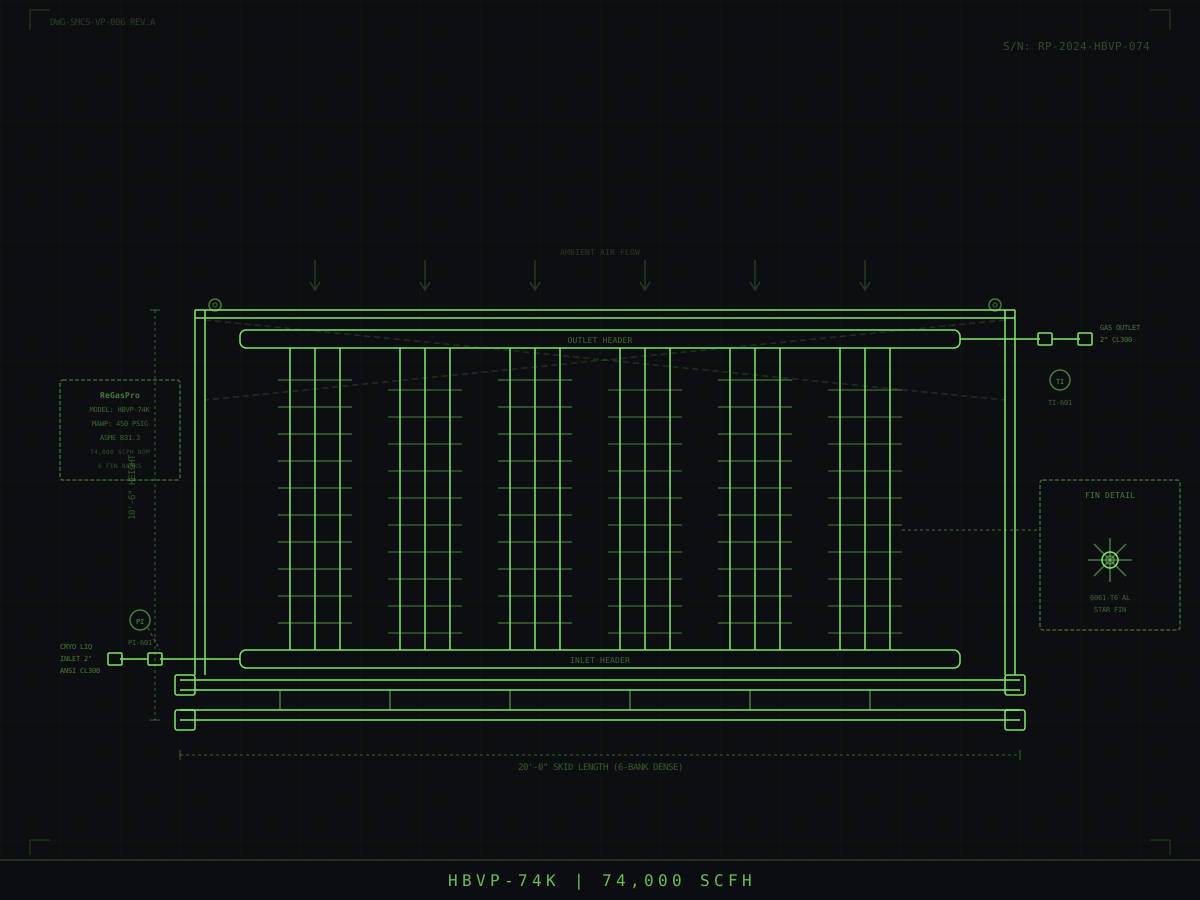
Ambient air vaporizers are passive heat exchangers that use atmospheric heat to convert cryogenic liquids to gas. No electricity, no fuel, no moving parts — just physics and aluminum fins doing their thing. They are used extensively in LNG, nitrogen, oxygen, and argon installations. Key specifications include:
- Flow capacity (rated in SCFH — standard cubic feet per hour)
- Inlet pressure and outlet pressure ratings
- Number of banks — Multiple vaporizer banks allow alternating duty cycles (one bank active while the other defrosts)
- Fin material — Typically extruded aluminum for maximum heat transfer surface area
For LNG applications, vaporizers serve the critical function of converting liquid fuel back to gaseous form at the required pressure and flow rate for dispensing or pipeline injection. I always have vaporizers in stock. Always.
CNG Applications
CNG systems generally do not require vaporization equipment since the gas remains in gaseous state throughout the compression, storage, and dispensing process. The exception is LCNG (liquefied-to-compressed natural gas) stations, which receive LNG and use high-pressure cryogenic pumps and vaporizers to produce CNG — combining elements of both systems. LCNG stations are the Frankenstein's monsters of the natural gas world, and I mean that with affection.
Dispensing Equipment (The Last Mile)
LNG Dispensers
LNG dispensing involves transfer of cryogenic liquid and requires:
- Cryogenic-rated hoses and couplings — Must maintain flexibility and seal integrity at -260°F
- Specialized nozzles — LNG nozzles use a closed-loop connection to prevent methane release during fueling
- Vapor return lines — Capture boil-off gas from the vehicle tank during fueling
- Metering — Coriolis mass flow meters for accurate measurement of cryogenic liquid
CNG Dispensers
CNG dispensing is high-pressure gas transfer:
- High-pressure hoses — Rated for 5,000+ PSI with breakaway couplings
- NGV1 or NGV2 nozzles — Standardized connectors (NGV1 for light-duty, NGV2 for heavy-duty vehicles)
- Electronic metering — Measures gas volume and calculates energy content (GGE/DGE)
- Priority panel integration — Manages the dispensing sequence from storage banks (high, medium, low priority)
Buying Used: What to Watch For (Different Equipment, Different Traps)
When purchasing used LNG or CNG equipment, the inspection priorities differ significantly. Know which rabbit hole you're going down:
Used LNG Equipment Priorities
- Vacuum integrity — Check for frost on the outer jacket; request vacuum level readings. If there's frost, the vacuum is compromised. Period.
- Inner vessel condition — Verify gas service history and cleanliness
- Piping and instrumentation — All cryogenic-rated components must be intact
- Relief valve certification — Must be current for the specific gas service
- Pump condition — Cryogenic pump rebuild history and current seal condition
Used CNG Equipment Priorities
- Vessel certification — ASME nameplate data, hydrostatic test history, and remaining cycle life
- Compressor hours and maintenance — Total running hours, valve replacement history, oil analysis records
- Dryer condition — Desiccant media replacement schedule and current moisture levels
- Control system — PLC software version, calibration records, and communication protocol compatibility
- Storage vessel age — CNG vessels have defined service lives based on design standards (ASME Section VIII or DOT/NGV2)
Making the Right Choice (Let Me Help You Think This Through)
The LNG vs. CNG decision for your facility depends on factors beyond just the equipment:
- Fuel supply access — CNG requires a natural gas pipeline connection; LNG requires tanker truck delivery
- Throughput requirements — LNG has higher energy density per gallon of storage, making it more efficient for high-volume operations
- Vehicle fleet type — Heavy-duty long-haul fleets often favor LNG for range; light-duty and regional fleets typically use CNG
- Capital budget — CNG stations generally have lower upfront equipment costs but higher ongoing compression energy costs
Understanding these equipment differences ensures you purchase the right components for your application — and helps you avoid the special kind of headache that comes from buying the wrong type of equipment. I have both LNG and CNG equipment in my inventory, and I am happy to talk your ear off about which one makes sense for your situation. My wife would prefer I talk your ear off instead of hers.
Whether you're building new infrastructure or expanding an existing operation with secondary market equipment, matching the technology to your operational requirements is the first step toward a successful project. And if you're not sure which direction to go? That's literally what I'm here for. Drop me a line.